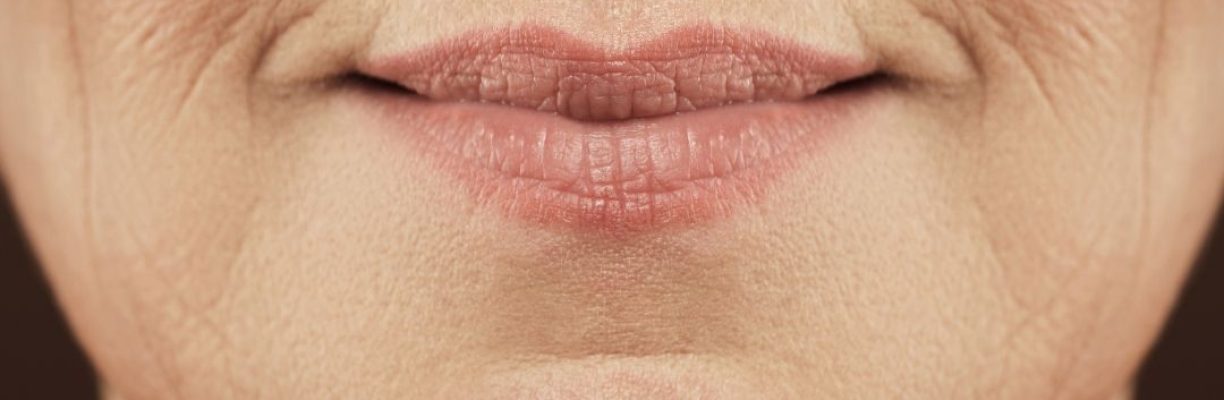
Perioral lines can create a difficult treatment-planning problem. A visible crease may sit in cutaneous skin, along the vermilion border, or within the lip, and those sites do not share the same evidence boundary.
This Belotero for lip lines provider guide brings those decisions together. It explains what the current U.S. label establishes, where the evidence becomes limited, what providers should document, and how clinics can prepare for verified product access.
What Belotero Balance (+) Is and What the Label Establishes
Belotero Balance (+) is a prescription, cross-linked hyaluronic acid dermal filler containing lidocaine. The FDA device summary for Belotero Balance (+) lists two indications:
- Mid-to-deep dermal injection for moderate-to-severe facial wrinkles and folds, such as nasolabial folds
- Volume augmentation for infraorbital hollowing in adults older than 21
The current FDA clinician labeling states that controlled studies have not established safety or effectiveness for dermal contour defects outside nasolabial folds and infraorbital hollows. It also states that use in the lips has not been evaluated.
We cover other product characteristics providers may consider separately. For clinical claims, the current U.S. label remains the controlling source.
How to Use Belotero for Perioral Lines: Define the Target First
For providers considering how to use Belotero for perioral lines, the first step is to identify the treatment site precisely. A vertical cutaneous rhytid above or below the vermilion is not the same target as the vermilion border, wet-dry junction, oral commissure, or lip body.
We use this Belotero perioral area provider guide to organize the charting questions, not prescribe a universal injection plan:
- Is the line static, dynamic, or mixed?
- Could tissue quality, dental support, scarring, asymmetry, or previous filler affect the plan?
- Is the intended endpoint line softening, border support, or lip volume?
- Does the consent discussion match the site and its evidence boundary?
- Does the record capture the product, lot, expiry, treatment site, and follow-up instructions?
If placement enters lip tissue, the label’s statement that lip use has not been evaluated applies directly.
Belotero Lip Line Injection Technique Requires Site-Specific Judgment
A Belotero lip line injection technique cannot be reduced to a fixed depth, pattern, or volume. The label describes linear threading, tunneling, fanning, and serial puncture for studied areas, but it does not establish a perioral-specific protocol.
The label also tells clinicians to avoid intravascular placement, inject slowly with the least pressure necessary, and avoid overcorrection. These safeguards do not make one technique appropriate for every perioral site.
Clinical studies cited in the label evaluated a total annual volume of up to 6.0 mL. That figure is not a lip dose or a perioral treatment recommendation.
Technique must remain with a qualified injector who can assess the anatomy, select the device and tissue plane, recognize vascular compromise, and manage complications.
Belotero for Smoker Lines Treatment Depends on the Line Pattern
Belotero for smoker lines treatment should follow the anatomy and cause of the lines, not the label commonly given to them. Vertical perioral rhytids may reflect orbicularis activity, photoaging, dermal thinning, volume loss, reduced structural support, or several factors at once.
We organize the decision around the dominant finding:
- Static etched lines may need a different plan from movement-dominant lines.
- Surface change may call for a skin-directed treatment rather than filler alone.
- Border support and lip augmentation involve different targets from cutaneous line correction.
- Scarring, asymmetry, previous filler, and dental support can change the risk-benefit assessment.
This keeps a product choice from replacing a complete facial assessment. It also supports clearer consent because the provider can explain which part of the perioral pattern the proposed treatment may address.
Evidence and Label Boundaries Should Guide Product Comparison
Evidence does not establish universal filler superiority. A clinical evidence review found broadly comparable safety among Belotero Balance, Juvéderm, and Restylane. In a randomized perioral trial with 136 participants, six-month responder rates were 87% with Juvéderm Ultra XC and 72% with Belotero Balance.
Our Belotero and Juvéderm comparison adds formulation context. Providers should match the labeling, studied anatomy, and tissue needs to the objective.
| Treatment site | Current evidence boundary | Planning implication |
| Nasolabial fold | Studied for dermal correction | Follow the label |
| Infraorbital hollow | Studied in adults older than 21 | Follow site-specific instructions |
| Cutaneous perioral rhytid | No controlled perioral study in the label | Disclose the evidence limit |
| Vermilion or lip body | Lip use has not been evaluated | Do not imply lip-specific FDA approval |
Patient Selection Shapes Safety, Fit, and Expectations
This Belotero fine line treatment clinical overview treats patient selection as a safety control. The label lists contraindications that include severe allergies associated with anaphylaxis, multiple severe allergies, hypersensitivity to lidocaine or amide anesthetics, and allergy to gram-positive bacterial proteins.
Providers should defer injection at a site with active inflammation or infection until the underlying problem is controlled. The label also identifies added considerations for:
- Pregnancy, breastfeeding, and patients younger than 21, for whom safety has not been established
- Previous herpetic eruption
- Immunosuppressive therapy
- Aspirin, nonsteroidal anti-inflammatory drugs, warfarin, or other substances that reduce coagulation
A complete history, examination, consent process, and follow-up plan should come before product selection. We do not treat a familiar product name as a substitute for a patient-specific assessment.
Stop Signals and Procurement Red Flags Require Immediate Action
The FDA label directs clinicians to stop injecting immediately if vision changes, signs of stroke, blanching, or unusual pain occur during or shortly after injection. Intravascular injection can cause embolization, vascular occlusion, ischemia, infarction, skin necrosis, blindness, stroke, or damage to facial structures.
Clinics also need a stop rule at receiving. Do not use a syringe if:
- The package is open, damaged, or expired.
- The gel appears cloudy, separated, or contains visible material.
- The product identity, lot, expiry, seller, or shipping records do not agree.
Our injectable receiving and quality checks explain how to hold, document, and investigate questionable stock. Clinical skill cannot correct an unresolved product identity or handling problem.
Traceable Sourcing Supports Defensible Clinical Use
Before buying, verify the seller, product identity, U.S. labeling, lot, expiration date, package condition, storage instructions, and available transaction records. The FDA label directs room-temperature storage up to 25°C/77°F, away from heat, and prohibits freezing.
That instruction does not support a 2-8°C cold-chain claim for Belotero Balance (+). Clinics should follow the current formulation-specific label rather than apply a generic injectable shipping rule.
Our guide to common online injectable purchasing mistakes explains why a familiar product image, polished website, or low price cannot confirm authenticity.
At DeWitt Pharma, we verify professional accounts before approval. The Belotero catalog is not yet open for ordering and remains pending final distributor authorizations, so the current next step is provider pre-approval rather than a product sale.
Final Thoughts on This Belotero for Lip Lines Provider Guide
A defensible perioral plan begins with an exact anatomical target and an honest evidence boundary. This Belotero for lip lines provider guide supports the assessment of cutaneous perioral rhytids without presenting Belotero Balance (+) as FDA-approved for lip injection or inventing a lip-specific dose, depth, or pattern.
We apply the same discipline to procurement. Before a syringe reaches the treatment room, the practice should be able to identify the product, source, lot, expiry, label, receiving condition, and record trail.
DeWitt Pharma is an independent distributor and is not affiliated with or endorsed by Merz Aesthetics. Licensed Texas providers can review our Belotero® provider page and apply for pre-approval while catalog access remains pending.
Frequently Asked Questions
What is Belotero Balance (+)?
Belotero Balance (+) is a prescription, cross-linked hyaluronic acid dermal filler containing lidocaine. Its U.S. label covers moderate-to-severe facial wrinkles and folds, as well as infraorbital hollow volume augmentation in adults older than 21.
How to use Belotero for perioral lines safely?
How to use Belotero for perioral lines depends on the anatomical target, patient factors, provider training, and readiness to manage complications. The U.S. label does not establish a perioral-specific protocol or lip-line dose.
When may a provider consider Belotero for smoker lines treatment?
Belotero for smoker lines treatment may be considered when a qualified provider identifies a static cutaneous rhytid that may respond to filler. Dynamic movement, photoaging, surface change, structural support, and previous treatment may point to a different or combined approach.
Who should perform treatment in the perioral area?
Only a licensed healthcare practitioner with relevant filler training, facial anatomy knowledge, and readiness to manage complications should perform treatment. Scope, supervision, delegation, prescribing, and purchasing rules vary by jurisdiction and professional role.
What does a Belotero lip line injection technique involve?
A Belotero lip line injection technique requires site-specific decisions about the target, tissue plane, device, pressure, pattern, and endpoint. The label describes techniques for studied areas but does not establish a perioral-specific protocol.
Is Belotero Balance (+) FDA-approved for injection into the lips?
The current clinician labeling states that the use of Belotero Balance (+) in the lips has not been evaluated. Providers should not interpret the broad facial-wrinkle indication as a lip-specific FDA approval.
Does this Belotero perioral area provider guide recommend a standard dose?
This Belotero perioral area provider guide does not recommend a perioral or lip dose. The label’s 6.0 mL annual studied limit is not an anatomical dosing instruction.
How does Belotero compare with Juvéderm or Restylane for fine lines?
Product choice should follow the treatment target, current labeling, tissue needs, and provider judgment. Comparative evidence does not establish universal Belotero superiority, and one randomized perioral trial reported a higher six-month responder rate with Juvéderm Ultra XC.
How often should patients return for follow-up after perioral treatment?
Follow-up timing should reflect the provider’s protocol, treatment extent, patient findings, and any emerging symptoms. Patients need clear instructions to report persistent swelling, redness, unusual pain, skin-color changes, or visual symptoms promptly.
What makes a Belotero fine line treatment clinical overview useful?
A Belotero fine line treatment clinical overview is useful when it separates label facts from clinician-dependent decisions. Accurate anatomy, patient selection, product traceability, follow-up, and readiness to manage complications matter more than promotional claims.
How can DeWitt Pharma support clinics considering Belotero?
We provide a provider-account review pathway for licensed Texas practices before catalog access opens. Our clinical and procurement resources also help clinics review current labeling, receiving controls, source records, and product-fit questions.
What is the next step after reading this guide?
Review the intended anatomical target, consent language, complication protocol, and procurement controls with the responsible clinical team. Licensed Texas providers can apply for DeWitt Pharma pre-approval while Belotero catalog access remains pending.